
For those of you who grow roses or are just curious, here are answers to questions that CPOR visitors often ask:
When should I stop deadheading (cutting off spent blooms)? 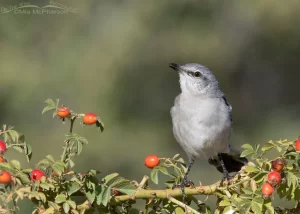
Deadheading encourages the rosebush to continue making new blooms, but this can be at the expense of hardening off the plant for winter. The common advice is to stop deadheading six weeks before frost, which in our Growing Zone 6 is the end of October. Therefore, we stop deadheading in mid-September. As a result, a rose hip, which is the bush’s fruit and carries seeds, typically forms. When rose hips develop, the bush stops making blooms. Again, this is part of the hardening off process. Rose hips are a great source of nutrition for birds over the winter.
Should I fertilize rosebushes in the fall?
 The last fertilization is typically done no later than early to mid-August. Fertilizing too late may cause new growth that will be vulnerable to frost. Should I mulch rosebushes in the fall? Mulching helps protect the roots. In the case of grafted roses like hybrid teas, it is necessary to protect the bud union, which is the spot where the desirable rose was grafted to the root stock. Roses benefit from mulch year round, usually 2-3.” Mulch for winter protection is much deeper to protect the bud union. It is done after there have been several frosts and the ground is cold. In our Growing Zone, it is late November or early December. The mulch helps keep the ground temperature consistent rather than warming and cooling when we get a warmer day and cold night.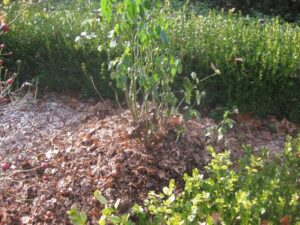
Should I prune rosebushes in late fall?
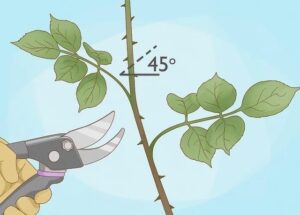
Rose canes will always have some winter dieback. Here at the CPOR we used to prune in November, theoretically to prevent wind damage. Because the rose canes were shortened in fall, additional spring pruning for dieback made them really short. In recent years, we have been doing only spring pruning, and it has worked well. We prune in March and April, and the bushes are glorious by the end of May.